 By Eliza Popova
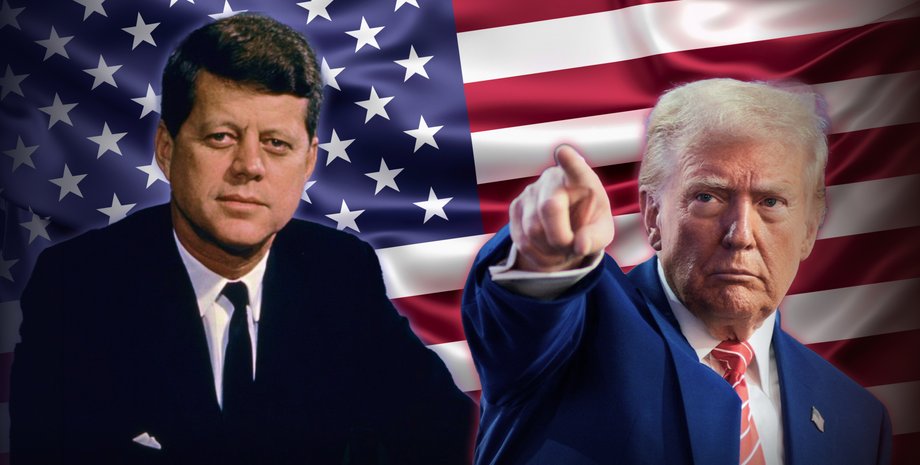
And almost on the same days, on November 5, 2024, Donald Trump was elected for the second time as the leader of the United States. Two dates, two presidents — and two completely different models of American leadership. About what parallels can be drawn between them and what the war in Ukraine might look like if Kennedy were sitting in the White House today, candidate of political sciences, international expert Stanislav Zhelikhovskyi told Focus. John F. Kennedy was the leader of the Cold War era.
For him, the main thing was to maintain a balance - not to give in to the enemy, but also to prevent a major war. Raised in an influential political family, a veteran of World War II, he saw the value of human decisions and responsibility. For him, the state was a joint project, and the allies were partners in long-term stability. This shaped his approach as a politician, who sought to combine force with diplomacy. "The Caribbean crisis in 1962 was a vivid example.
Then Kennedy did not give in to military pressure and did not strike first. He chose a combination of force and negotiations, demonstrating firmness, cold intelligence and pragmatism. This step made it possible to avoid a nuclear catastrophe, and diplomacy brought a real result - the establishment of direct communication between Washington and Moscow," Stanislav Zhelikhovskyi tells Focus. Donald Trump is a different kind of politician.
He has no military experience, did not complete civil service, but entered politics from business and media popularity. His thinking is a category of benefit, result "here and now", political effect. For him, allies are not strategic partners, but participants in agreements from which concessions or favorable terms can be obtained. During his presidency, Trump signed a number of agreements — with the EU, Japan, and the countries of Southeast and Central Asia.
There were even talks about his desire to negotiate with Russia not only on a ceasefire, but also on economic issues, for example, regarding minerals. Moscow actively sought such agreements, but Ukraine was able to sign a strategic agreement with the United States, and the Kremlin's attempts to influence the situation failed. "Trump acts directly and impulsively. Let's recall the incident in the White House, when the delegation of Ukraine left the negotiations after making provocative statements.
Such a situation would have been impossible for Kennedy. He attached great importance to the image of allies and maintained respect even in difficult crises. Trump, on the contrary, often perceives international relations as a bargain. Because of this, his position on Ukraine looks inconsistent: from strong support to statements about the need for "peace agreements" with Kyiv's concessions," the political scientist continues. According to Zhelikhovsky, if John F.
Kennedy had been president of the United States in 2022, at the start of a full-scale Russian invasion, his response would probably have been faster and more precise. He would initiate the mobilization of the collective West and active work with allies and international institutions to coordinate aid to Ukraine. Kennedy, as the leader of the Cold War, clearly distinguished between "friends" and "enemies", so he would have acted more consistently.
It would combine ad hoc military aid with active diplomacy — including through closed channels of communication — to prevent escalation. His diplomacy would be pragmatic, not populist, like Trump's, who is often driven by a desire to please voters or reap political dividends. Kennedy could probably be more assertive than Joe Biden militarily—showing readiness to act, but within a rational strategy that minimizes the risks of direct confrontation with Russia.
His principle is "strength through restraint. " The political scientist is sure that if Kennedy had been in power, he would have supported Ukraine with a steady flow of arms, but with a greater emphasis on coordination with Europe to avoid the depletion of resources and at the same time not give Russia a reason to blame the West for escalation. He would also promote international alliances in arms production and logistics, and keep diplomatic channels open with Moscow to prevent nuclear blackmail.
"Trump reacts symmetrically - he talks about resuming nuclear tests, about a show of force, but he does it more for effect than as part of a well-thought-out strategy. This increases the degree of tension, reminiscent of the rhetoric of the Cold War, but without the cold rationality that Kennedy possessed," says the expert. During Kennedy's presidency, the USA experienced not only the Caribbean crisis, but also the beginning of the Vietnam War.
It had a different nature - ideological rather than aggressive, but it became a battlefield between the USSR and the USA. Today, parallels can be drawn with the situation in Ukraine, where Russia, as the rightful successor of the USSR, again acts as an "evil empire". "Even Kennedy's mistakes - such as the failure of the Bay of Pigs operation - have their lessons. The failed attempt to invade Cuba showed that even an analytical policy can fail if there is a lack of coordination.
Today, a similar situation may repeat itself with Venezuela, which for Trump could potentially become the "new Cuba" if he tries force scenarios to influence the Maduro regime," Zhelikhovsky continues. Kennedy operated in a bipolar world with clear "red lines" and clear rules of the game. The modern world is much more complex: hybrid threats, cyber security, information wars.
His style of governance would require adaptation, but the main principle - balance and responsibility - would remain relevant. "Comparison with Trump shows: the leader's political will and communication style directly affect the behavior of allies. Trump creates political uncertainty with his contradictory statements - for example, about Tomahawk missiles or "peace agreements" with Russia. European partners try to compensate for this instability.
Kennedy, on the other hand, was predictable in crises, sought to create coalitions and strengthen transatlantic unity. Just such a strategy could to strengthen Ukraine's defense capabilities in the current conditions," the political scientist believes. John Kennedy and Donald Trump are the two poles of American politics. One is a symbol of restraint, diplomacy and responsibility to allies. The other is the embodiment of impulsiveness, profit and political show.



 USA
USA Українська
 English
 Français
 Deutsch
 Italiano
 Polski
 Čeština
 Español
 Slovensku